
Bruce’s Career
Bruce Jones Surfboards was founded in 1973, at a moment when surfboard design was evolving at a pace the sport had never seen. By then, Bruce had already spent nearly a decade shaping full‑time—first at Clark Foam in the mid‑60s, where he glued and planed stringers, and soon after at Hobie Surfboards, where he refined his craft under some of California’s most influential shapers. His early mentors included Ralph Parker, Terry Martin, Gordon “Gordie” Duane, and Phil Edwards—craftsmen whose design philosophies shaped the foundation of modern surfboard building.
Throughout the late 60s and early 70s, Bruce shaped for many of California’s most respected labels: Gordie Surfboards, Dick Brewer, Plastic Fantastic, Russell, and Vardeman among others. Each stop added a layer to his design language, but his years at Russell Surfboards in Newport Beach were especially formative. Russell’s shop was a hub of experimentation and young talent, and Bruce became a quiet but steady mentor to the next generation. During this period he influenced and guided two shapers who would later become icons in their own right: Shawn Stussy, who would go on to reshape both surf culture and global streetwear, and Jeff Timpone, who would become one of the most respected craftsmen in Hawaii and California. Both spent time under Bruce’s wing, absorbing his disciplined approach to curves, rails, and functional simplicity.
In 1973, Bruce opened Bruce Jones Surfboards in Sunset Beach, California—just up the road from Huntington Beach Pier. His shaping philosophy was rooted in the modern lines of his early training: clean curves, balanced foils, and designs guided by function, performance, and a refined understanding of wave-riding. His most notable work includes the Jackie Baxter Model for Vardeman Surfboards in the late 60s, his early and mid‑70s single-fin guns featuring hand-drawn logos by Jericho Poppler, and his original concept for the Modern Longboard, first developed in the late 70s and continually refined into the 20th and 21st centuries. The Modern Longboard became a favorite of many accomplished surfers, including the late Rell Sunn, whose grace and style aligned perfectly with Bruce’s design sensibilities.
Bruce was also an early and vocal supporter of women’s surfing at a time when the industry often overlooked it. He shaped for Jericho Poppler, who won a world title riding his boards. Their collaboration was built on mutual respect—Bruce valued Jericho’s feedback, athleticism, and design intuition, and she trusted his ability to translate her surfing into functional, elegant equipment. Their partnership stands as one of the earliest examples of a shaper–surfer relationship that treated a woman athlete with the same seriousness and technical focus as any man in the lineup.
Today, Bruce Jones Surfboards continues as a heritage shaping label, dedicated to preserving Bruce’s original designs exactly as he created them. Every board is hand-shaped by his son, Brock Jones, using Bruce’s archived templates, notes, and design language. These are not reinterpretations or modernizations—they are faithful reproductions of the boards Bruce built during his lifetime, crafted with the same intention, precision, and respect for lineage.
Bruce Jones Surfboards remain a living part of surfing’s history, still finding their place in the lineup more than fifty years after the brand began.
For custom orders or inquiries about heritage reproductions, please contact us.

Bruce and the Outdoors
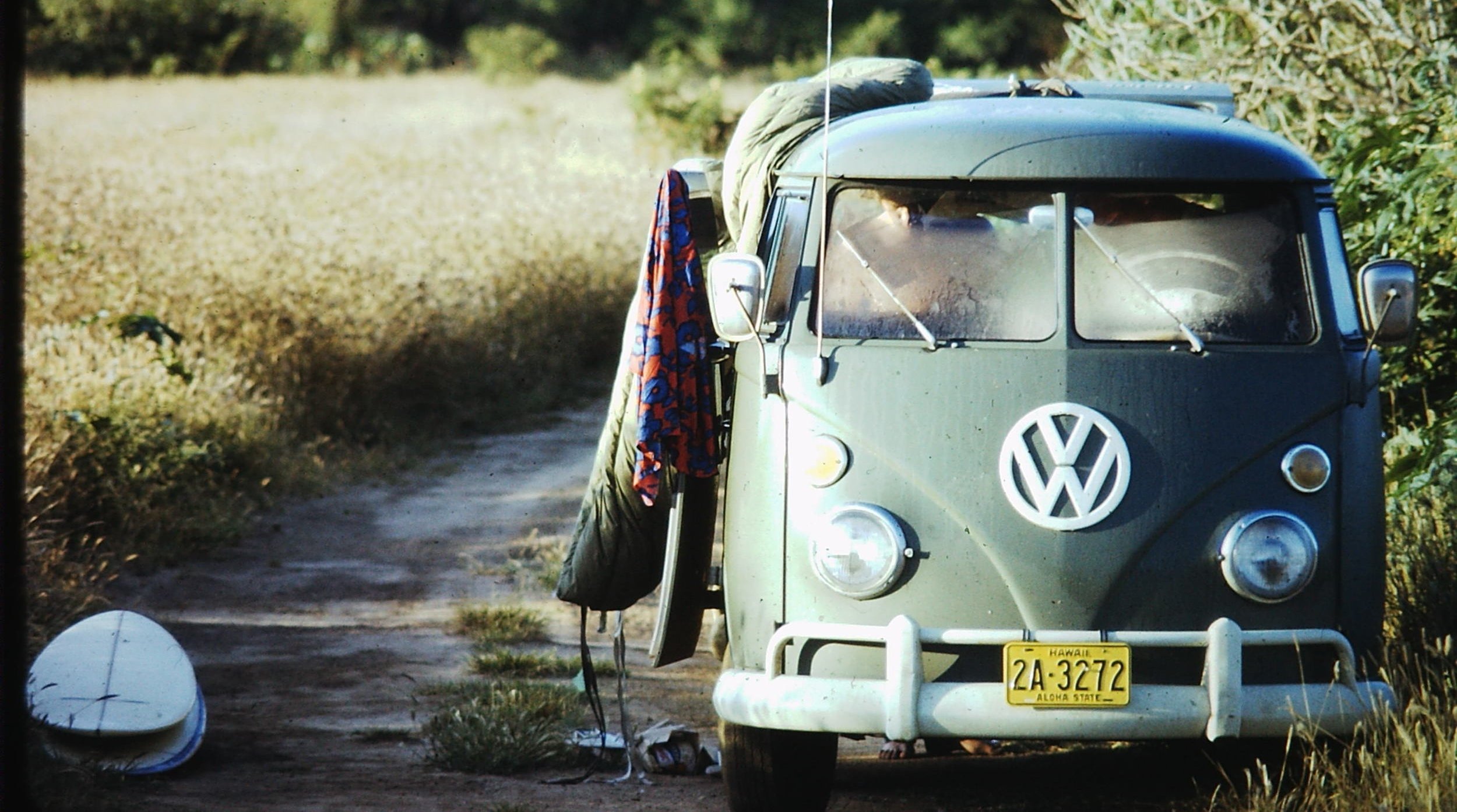
In addition to surfing, Bruce was an avid backpacker and sailor who loved the California wilderness. Bruce’s parents introduced him and his three brothers to camping at a young age. Coastal camping at Pismo Beach or amongst the meadows of the Western Sierra Nevada were common family vacations. Clamming at Pismo, fly fishing in the Kern tributaries or sailing in small, local regattas were common activities that have defined four generations of Jones family
Bruce spent his young-adult life between the California coast, the mountains and the desert; his favorite places being those outside of the urban sprawl. As a young man he crossed the Sierra Nevada from East to West several times and would often recall traversing Kearsarge & Forrester Passes before dropping into the Kern River moraine to climb back out via Rattlesnake Creek and Farewell Gap finally arriving at Mineral King.
Bruce balanced his later years between shaping, his surf shop, his sailboat “Sheila” (named after his wife) and camping with his family in the California mountains and deserts.
The Bruce Jones Longboard Team
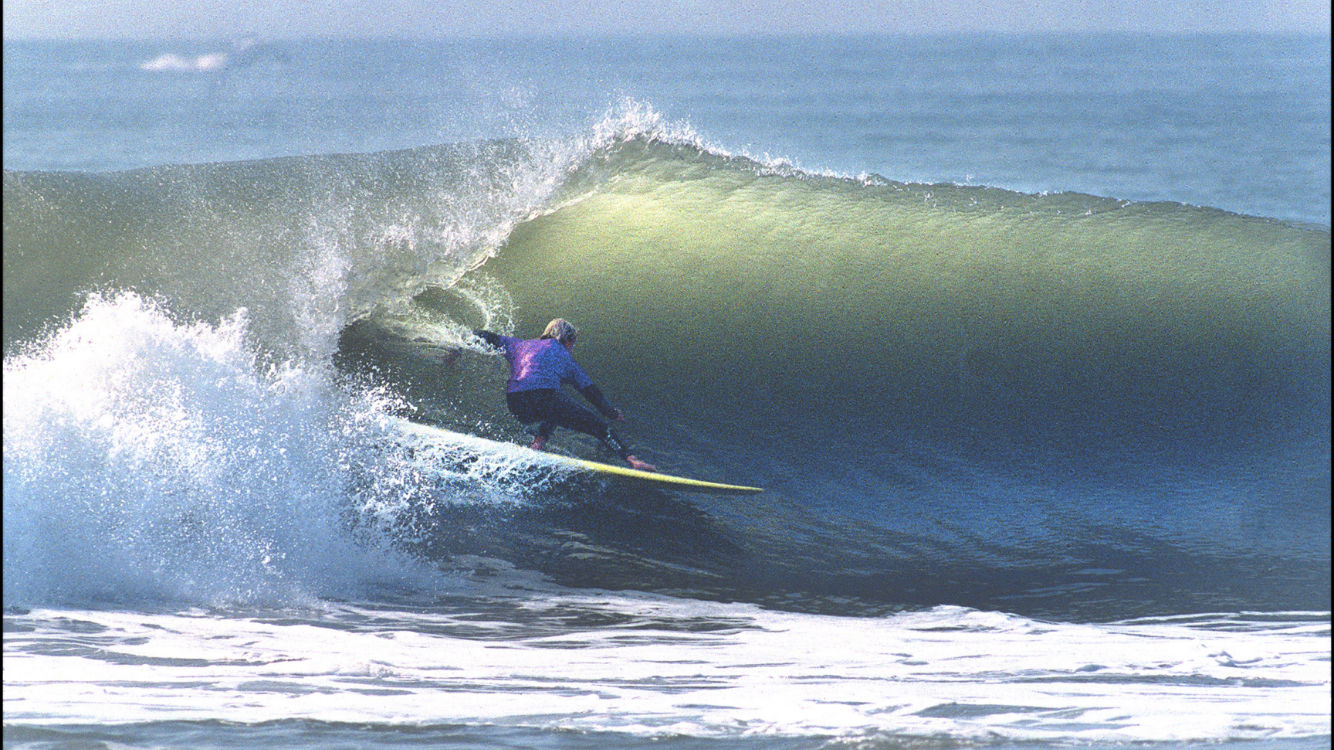
In the early/mid 90s, Bruce put together a group of Long Beach and north Orange County longboarders to represent his brand in the number of longboard events that spanned the California coast at the time. First to join this young grouping were Jody Lemmon, Matt Steuck and Cody Simpkins whom Bruce took to all the stops of the final season of the PLA. They each took their respective age groups that season and represented some of California’s finest longboarding.
Soon after Dodger Kremel and Cody Faircloth joined the team followed by Greg Irvin, Dave Roberts, John Husak, Cyrus Sutton and Bruce’s son, Brock. This was a tight-knit, rambunctious group that would pull up at the beach in Bruce’s Volvo station wagon (roof rack armed to the teeth with logs) and take over the lineup. The board’s built and the surfing done with Bruce Jones in those years (from 1994-2002/3) represented some of California’s finest and left a lasting impression on the longboard scene.
